
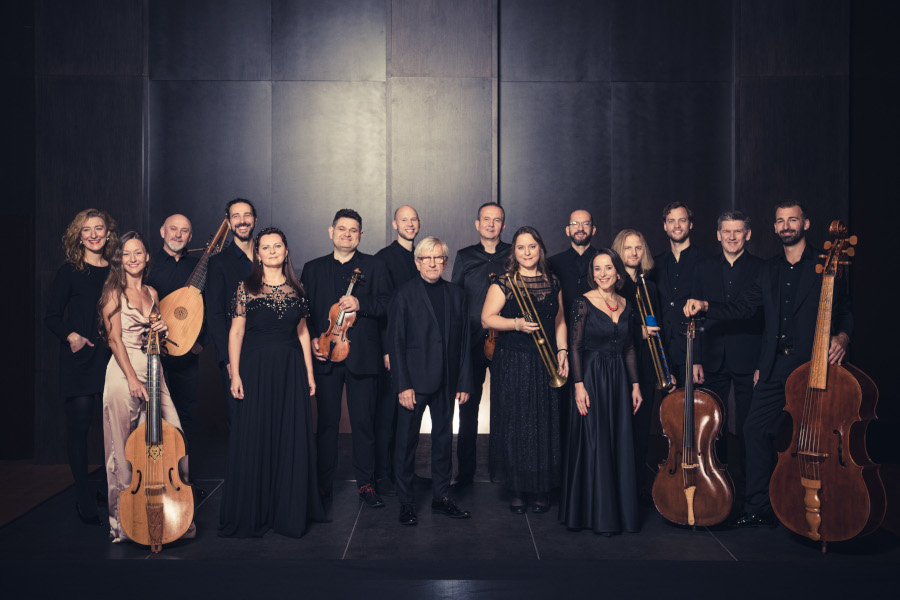
The Messiah, to be performed by Wrocław Baroque Ensemble under the direction of Andrzej Kosendiak, is one of the greatest masterpieces of Baroque music. Although its composer, George Frideric Handel, was born in Germany, he achieved true fame in England, where he settled in 1712. Initially, he dominated London stages as a composer of Italian operas, enjoying generous royal patronage. However, changing audience tastes and the success of John Gay and Johann Christoph Pepusch's The Beggar's Opera prompted Handel to seek a new form of expression. He then focused on oratorios in English – dramatic choral works without staged action – which earned him lasting affection among British audiences.
The Messiah, a truly groundbreaking work, was written at lightning speed, in just three weeks at the turn of September 1741. Although today it is seen as a work of genius, this haste and alleged carelessness in scoring caused soured the relations between Handel and Charles Jennens, the author of the libretto. The oratorio’s world premiere took place on April 13, 1742, in Dublin, and it proved to be a resounding success. Such was the interest that men attending the premiere were asked not to wear sabers, and women to forgo hoops in their skirts, so that the Great Music Hall could accommodate seven hundred people. Although the work initially received a lukewarm reception in London, after revisions to the score, it became a canonic work of Western music.
The oratorio’s structure comprises three parts: the announcement of the coming of the Saviour; the story of his life, death, and resurrection; and the vision of humanity’s salvation. Handel masterfully combined elaborate polyphony with dance rhythms and innovative effects. The most famous section of the work remains the Hallelujah chorus, which brilliantly combines the singers’ calls and imitative episodes. While the story of King George II rising in delight to hear this music is probably not true, the English custom of standing to listen to this passage has endured for centuries. The enthusiasm with which The Messiah is received, however, has a global and timeless dimension.