
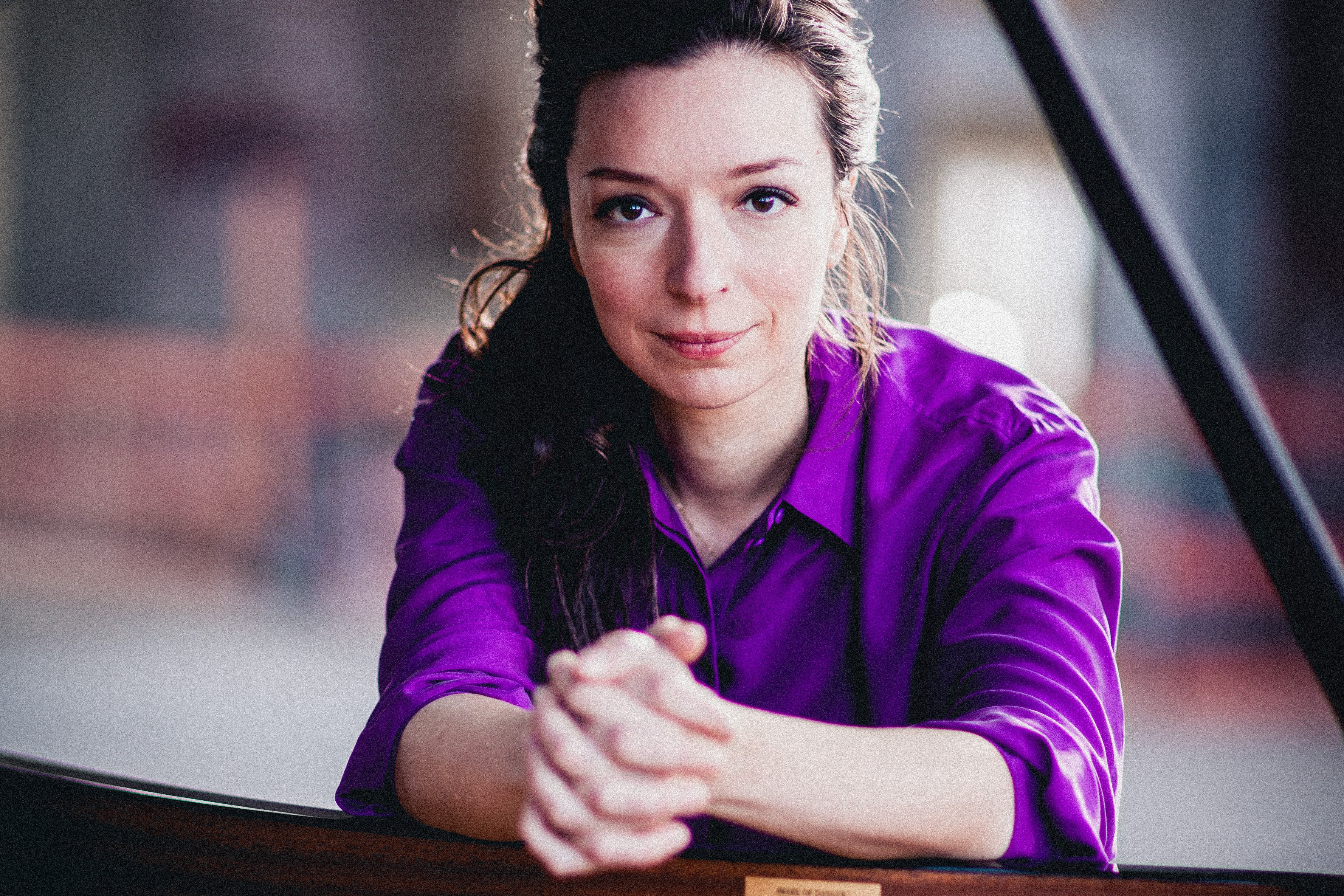
Yulianna Avdeeva previously visited the NFM in 2018, celebrating the centenary of Polish independence. Back then she performed one of the Chopin piano concertos. The winner of the 16th International Fryderyk Chopin Piano Competition, Avdeeva has also recorded works by Mieczysław Weinberg and Władysław Szpilman. During the NFM Leopoldinum Orchestra Season Finale, Yulianna will appear with the Leopoldinum in superbly written concertos by Alfred Schnittke and Felix Mendelssohn.
The evening’s programme will range from brilliant, light classical music to its 20th-century reinterpretations. Wolfgang Amadeus Mozart’s Serenade No. 6 in D major, known as “Serenata notturna” for strings and timpani, undoubtedly falls into the former category. This work, full of charm and humour, was allegedly commissioned by a member of high society to adorn an evening of entertainment with a large group of friends. Felix Mendelssohn’s Double Concerto in D minor, which will be performed next, is the work of a fourteen-year-old. By 1823, the Romantic prodigy was already an accomplished pianist and violinist, but also an interlocutor of Goethe and a philosopher. Mastering the technique of playing the violin and piano, the young man created a captivating, truly virtuosic composition, imbued with a full range of emotions.
During the height of the Third Reich’s power, in 1942, Richard Strauss’s last opera, Capriccio, premiered in Munich. The performance starts with a concert scene, featuring a sextet composed by one of the protagonists. This strange, self-referential, and stylised work was, as it were, a witness to some of history’s most horrific chapters, resulting in the opening chamber piece sounding like an echo of ancient beauty. Alfred Schnittke’s 1979 concerto, on the other hand, is a mature attempt at poly-stylistic form. Formally, it draws on both the sonata and the variations. Romantic or downright classical piano textures, references to Orthodox chant and jazz improvisation, dance moments, grand climaxes, and muted alienation can be heard here. The presence of a full meaning proves to be illusory each time, yet the ending, according to the composer, suggests some hope...