
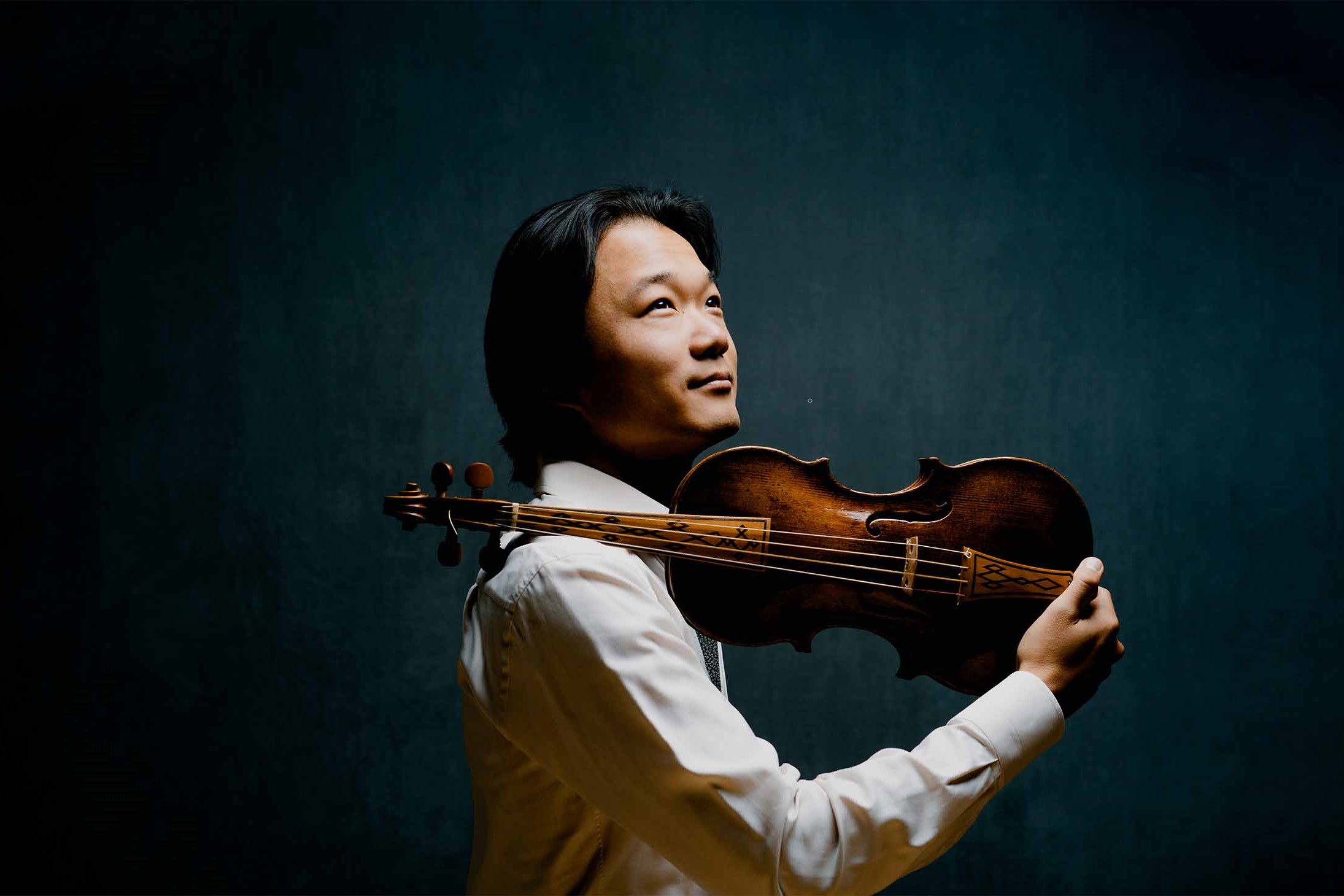
“He is the father, and we are the children. Those of us who have achieved something learned from him (...),” Wolfgang Amadeus Mozart is believed to have said about Carl Philipp Emanuel Bach. After his death, CPE Bach was called a “Klopstock, who wrote notes instead of words”, and his contemporaries considered him the epitome of German musical style. During the final concert of the season, Wrocław Baroque Orchestra, led by violinist and soloist Shunske Sato, will search for echoes of CPE Bach’s legacy in the works by Mozart, but also Felix Mendelssohn, and Ludwig van Beethoven.
From the catalogue of the “Berlin Bach”, we will hear the Symphony in F major, from around 1776, which astonishes the listener at every turn. It was among the works he composed during his stay in Hamburg. A phenomenal example of the Sturm und Drang aesthetic employed in a work of music, it includes flutes, oboes, French horns, and bassoon in the line-up and is imbued with abrupt shifts in mood and dynamics, unexpected solos and duets. Mozart’s music for Tobias Philipp von Gebler’s drama Thamos, King of Egypt can be described in a similar way. However, it should be remembered that in this case, the form reflected the action of the play. This premiered in 1774. At that time, however, most of Mozart’s incidental music had not yet been composed.
We will also hear the Violin Concerto in D minor by the thirteen-year-old Felix Mendelssohn, whose somber mood may be a result of the arrival of a new era in art history: Romanticism. It is known that Mendelssohn knew and appreciated the work of the Bach family. After all, it was he who undertook the first public performance of the St Matthew Passion, thus initiating a renaissance of Johann Sebastian Bach’s music. Ludwig van Beethoven certainly encountered Carl Philipp Emanuel Bach while still in Bonn. It is known that he studied CPE Bach’s treatise The Art of the Clavier. He carried it with him and recommended it to his famous student, Carl Czerny. Beethoven’s Symphony No. 1, premiered in April 1800, is only a prelude to the later achievements of the author of The Ninth. This does not mean, however, that it is not an innovative composition. From the very first bars, it shocked audiences accustomed to 18th-century conventions with the use of an interjected dominant.