
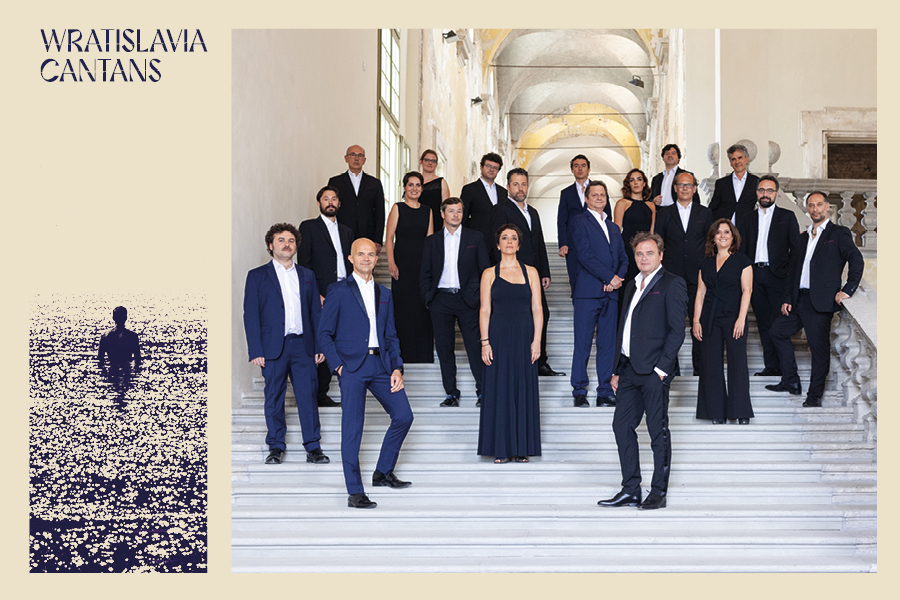
Although Dido’s famous lament, When I am Laid in Earth, is now widely recognised outside the context of classical music, the events that led to the queen’s tragic death are rarely pondered. In this concert performance of Henry Purcell’s Dido and Aeneas, soloists such as Arianna Vendittelli, Mauro Borgioni, and Delphine Galou will explore the whole story. The Capella Cracoviensis chorus will play a significant role in the work. The singers will be accompanied by Ravenna’s Accademia Bizantina, led by its artistic director, harpsichordist Ottavio Dantone.
Dido and Aeneas is often referred to as Henry Purcell’s only opera. It owes much to the masque genre – a court performance transplanted from France that integrates song, dance, and instrumental music. Purcell, who composed music for numerous plays, here employed French-style choral forms, Italian aria patterns, and the sinfonia (which has been lost). None of Purcell’s other dramatic works is sung from beginning to end. It is with this unique gem that England opens its operatic canon.
Libretto author Nahum Tate based it on an ancient epic poem – Virgil’s Aeneid. In Virgil’s poem Dido was the queen of Carthage, an ancient city, whose ruins lie in present-day Tunisia. She fell in love with a Trojan named Aeneas who appeared at her court. Their marriage was soon arranged. Unfortunately, a vicious witch, along with her companions, ghosts and spirits, sought to destroy this union. Disguised as Mercury, she ordered Aeneas to leave Carthage, telling him that his destiny was to establish a new city in Italy. When Dido learned that her beloved had been entertaining the thought of leaving her, she refused to see him again. She died immediately after uttering her famous lament. This choice, a tragic shadow line of her life, was dictated by her responsibility towards Carthage.
We know that Dido and Aeneas was performed in 1689 at a London girls' school, but some believe it was composed for the royal court. The story can also be read as a political allusion to the Glorious Revolution. Aeneas would then have been the king’s predecessor, the Catholic James II, and the demons the temptations of Rome. In this symbolic configuration, Dido would have represented the proud, Protestant English nation.