
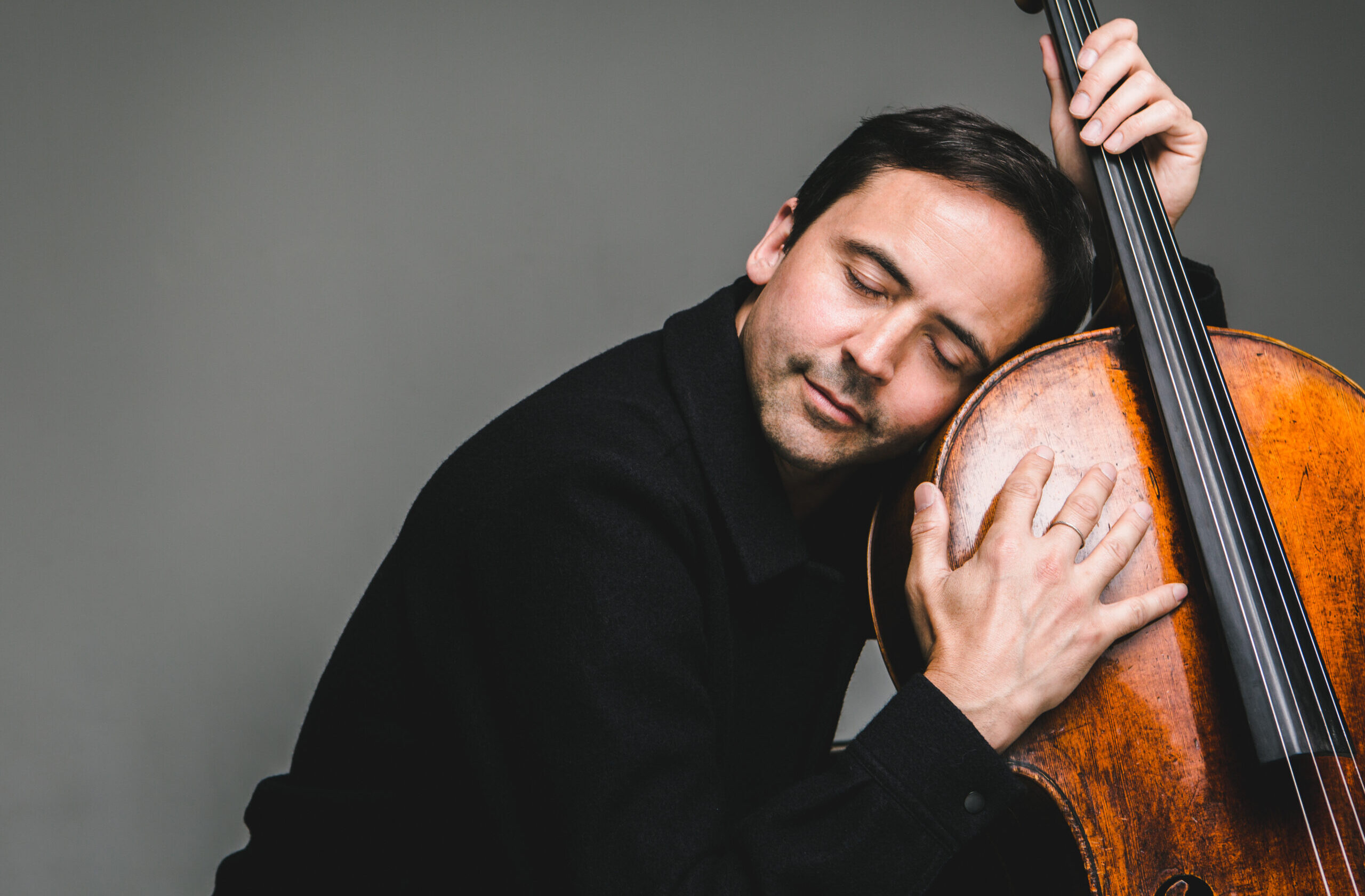
Three generations of composers, three distinct musical languages, and a fascination with the sound of the orchestra – the NFM Wrocław Philharmonic concert programme features works by Philippe Manoury, Henri Dutilleux, and Béla Bartók, artists for whom symphony orchestra was a natural means of expression. The soloist will be the distinguished French cellist Jean-Guihen Queyras, acclaimed both for his approach to the classical repertoire and his commitment to performing contemporary music. Pascal Rophé, one of the most distinguished interpreters of 20th- and 21st-century music and a long-time collaborator with the Wrocław Philharmonic, will conduct.
The concert will begin with Maelström (Hommage à Boulez) by the contemporary French composer Philippe Manoury. This short piece was commissioned by Radio France in 2024 and premiered on January 17, 2025, at the Paris Philharmonic, performed by the Orchestre National de France under the baton of Thomas Guggeis. The event honoured the centenary of Pierre Boulez’s birth – a composer and conductor, who died in 2016 and was one of the most important figures in music at the turn of the 21st century. Henri Dutilleux’s Tout un monde lointain…, completed in 1970, is considered one of the best cello concertos of the 20th century. This colourful, shimmering, dreamlike, and at times unsettling composition was written for Mstislav Rostropovich, for whom Benjamin Britten, Witold Lutosławski, Krzysztof Penderecki, and Dmitri Shostakovich also composed. The work’s title – The Whole Distant World… – alludes to Charles Baudelaire’s Fleurs du mal. The individual movements are titled: The Riddle, The Gaze, The Wave, Mirrors, and The Hymn. Each is accompanied by a quote from Baudelaire’s poetry, indicating the mood and emotional nature of the music. Among the numerous recordings of the piece is one conducted by Pascal Rophé.
Béla Bartók’s five-movement Concerto for Orchestra dates from 1943. It is one of the Hungarian composer’s last, yet most popular and frequently performed works. Paradoxically, despite being written during a difficult period in his life, it captivates with its energy, richness of colour, and exuberance. It was written at the initiative of the Russian conductor Sergei Koussevitzky, artistic director of the Boston Symphony Orchestra. The commission was intended to support Bartók after his emigration to the United States – caused by his opposition to the fascist tendencies in his homeland’s politics – when financial struggles added to his health problems. In this late composition, its composer once again drew from one of his most important sources of inspiration: the folk music of Central Europe. The work makes the most of individual orchestral parts’ potential, allowing musicians to showcase the mastery of their craft.