
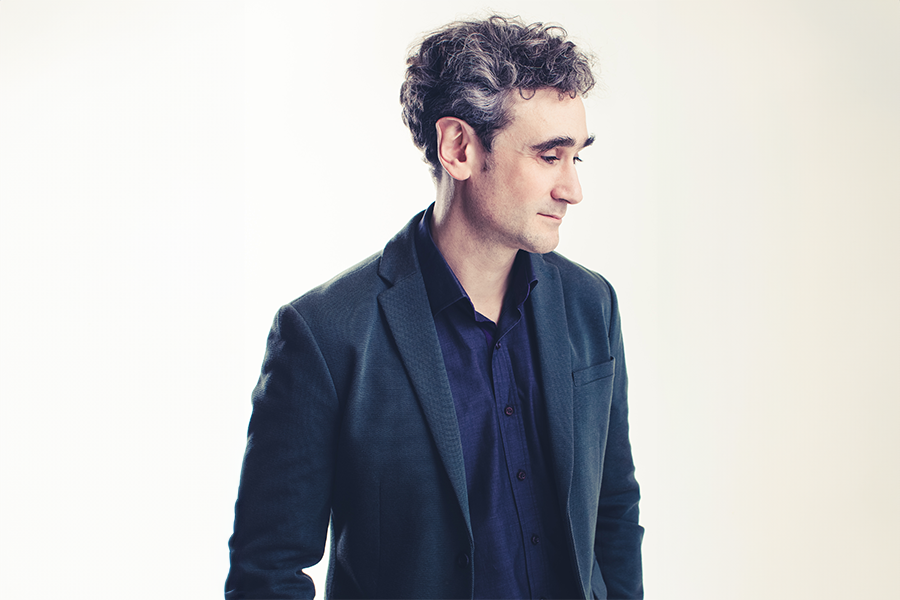
Arvo Pärt and Krzysztof Penderecki are composers shaped by their experience living in the countries ruled by communist regimes in the second half of the 20th century – Estonia and Poland. The concert will complement the presentation of their works with the premiere of a composition by Wrocław-based artist Mateusz Ryczek, who will participate. Michał Micker and Wojciech Jeliński will also perform with the NFM Leopoldinum Chamber Orchestra, and Christian Danowicz will not only lead the musicians but also perform the solo violin part in a piece by the Estonian master.
All the works in the concert’s programme are united by their use of the concerto form. The opening Sinfonietta per archi from 1992 is one of those works in Krzysztof Penderecki’s catalogue that summarises his artistic journey. It is an original transcription of an earlier String Trio. By dividing the musicians into competing groups, the composer draws on the tradition of the Baroque concerto grosso. References to Neoclassicism and the style of Béla Bartók are also evident. Inspired by the audiosphere and history of Wrocław, Strings of the City by another Polish composer is described as a trombone concerto. It was written by Mateusz Ryczek, an award-winning graduate of the Karol Lipiński Academy of Music, where he studied with, among others, Grażyna Pstrokońska-Nawratil, Cezary Duchnowski, and Zbigniew Karnecki.
Arvo Pärt’s double concerto Tabula rasa, to be performed after the intermission, is one of the most important instrumental works by this composer and has marked a turning point in his career, introducing his characteristic tintinnabuli style to the realm of large-scale musical forms. The piece was written in 1977 at the request of Gidon Kremer. It consists of two contrasting movements: the dynamic Ludus and the slow Silentium. The titular tabula rasa refers to a concept from ancient philosophy – the human soul, described by Aristotle, in the state it is in right after birth, unaffected by the vicissitudes of life.