
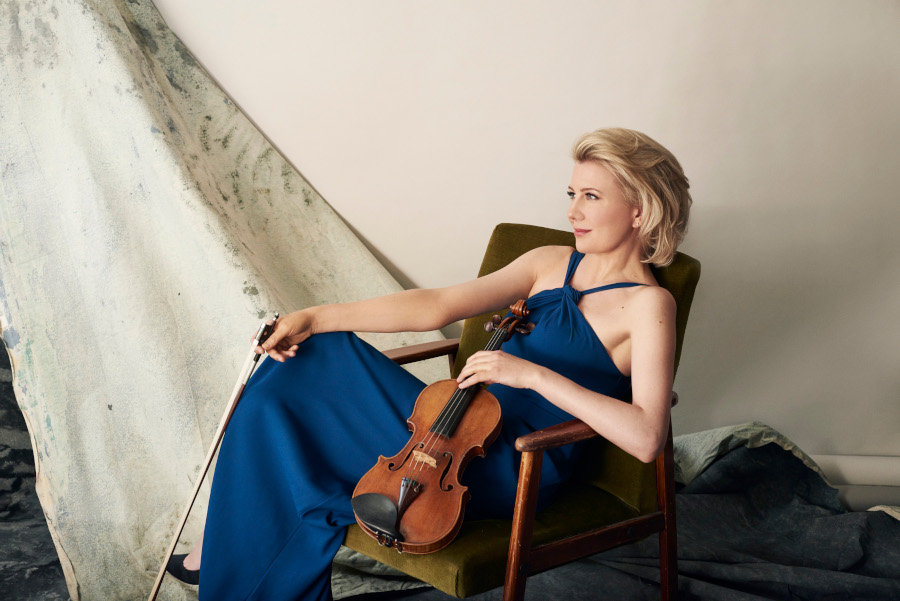
Finnish violinist Elina Vähälä made her debut on the stage of the NFM’s ORLEN Main Hall in 2015, during the first weeks of the NFM’s new venue. The performance featured Jean Sibelius’s Violin Concerto in D minor, marking his 150th birth anniversary. Twelve years later, the artist will conduct the NFM Leopoldinum Chamber Orchestra in two orchestral works by Sibelius. She will also perform the solo part of Pēteris Vasks’s fantasy Vox Amoris. The evening will provide a rare opportunity to hear Miklós Rózsa's Concerto for String Orchestra.
When discussing the music of Vähälä’s homeland, it is impossible not to mention Sibelius, one of the greatest symphonists of the 20th century. He was also a violinist, so he was intimately familiar with the nature of the string orchestra. In 1904, the world became familiar with his Romance in C major op. 42, rendered in muted yet expressive colours. Still in the 19th century, the composer arranged two piano impromptu pieces op. 5 for string orchestra. This miniature combines melancholy with inner peace. This blend is sometimes seen as the essence of “Northern Romanticism”. The fantasy Vox amoris for violin and orchestra can be described as a concerto. By choosing this form, Vasks undoubtedly wished to draw attention to the freedom of the unfolding narrative, which seems to illustrate the various shades of the most powerful force in the universe – love. The work, which reaches into the deepest and most precious layers of emotion, was first performed in Sydney in 2009.
The programme will be crowned by Rózsa's Concerto for String Orchestra, written in 1943, after the composer had moved to Hollywood. The Hungarian was to remain in the dream factory forever, creating music for films such as Alfred Hitchcock’s The Spellbound and William Wyler’s historical blockbuster Ben Hur. The work the artists will perform is often recognisable for its unsettling style typical of the film noir soundtracks Rózsa wrote in the 1940s. Yet there are also refreshing echoes of Hungarian music.