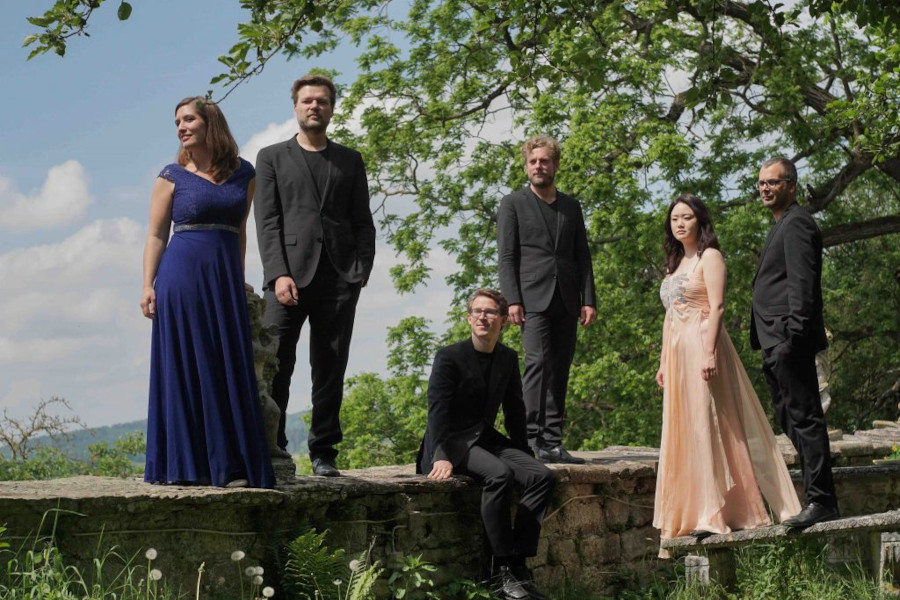
In the 2026/2027 season, the NFM hosts the acclaimed Ensemble Polyharmonique. This Berlin-based vocal group have a catalogue of outstanding albums to their credit, featuring early German and Franco-Flemish repertoire. The artists have been collaborating for over a decade and will perform church cantatas by Georg Philipp Telemann with Wrocław Baroque Orchestra. Countertenor Alexander Schneider stands out as the leading figure among the singers, while WBO is directed by its cellist, Jarosław Thiel.
It is easy to forget that Johann Sebastian Bach was not the only composer of cantatas for Lutheran services; Georg Philipp Telemann undoubtedly wrote more of them than the Leipzig cantor. We know today of at least twenty annual cycles, with around fourteen hundred Telemann’s cantatas having survived. He composed works in this genre while employed at the court in Eisenach (Thuringia) and while working as a city musician in the churches of Frankfurt and Hamburg – both enjoying the status of Free Imperial Cities. From the very beginning of his career, he cultivated stylistic diversity in his works, a practice that led to the various annual cycles being given distinctive subtitles.
The seven featured cantatas belong to the so-called “Sicilian cycle”, first presented no later than the 1719/1720 liturgical year in Eisenach (and subsequently repeated in Frankfurt and Hamburg). The name of this cycle – comprising five-movement works –derives from their predominant pastoral mood and lyrical melodies. In some of these pieces, including the Ihr Lieben, lasset uns untereinander liebhaben (Beloved, let us love one another) TWV 1:909, the rhythm of the siciliana dance appears. Most of the presented cantatas were intended for Ordinary Time of the liturgical year (following Pentecost). Their texts are by Johann Friedrich Helbig, and they are still waiting to be recorded.