
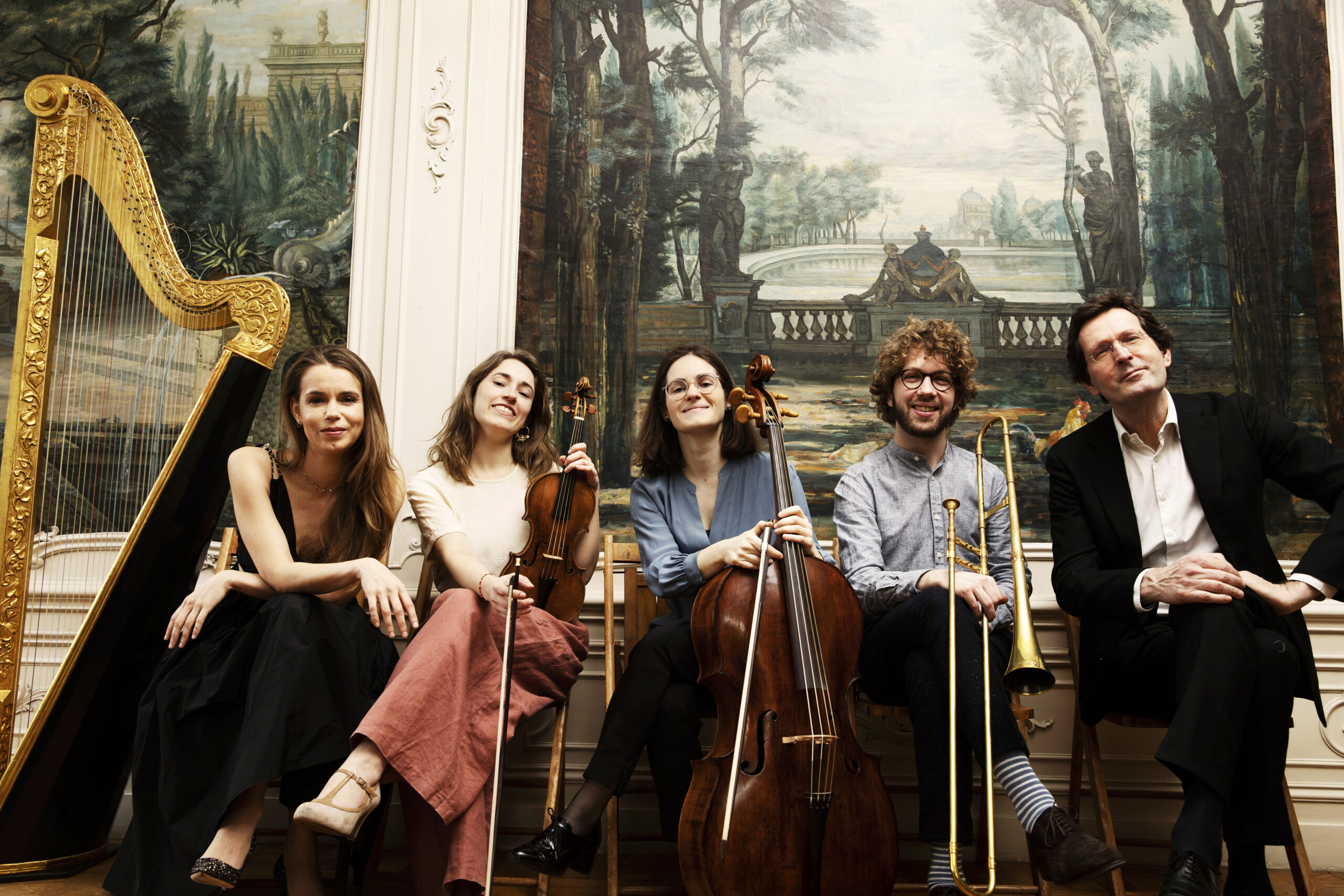
The early 17th century was a time of breakthrough in instrumental music. Until then, instrumental forms had been based entirely on vocal patterns and were only just beginning to gain an independent character. Italian composers distinguished themselves in the process of emancipating the instrumental idiom. Their works will be presented during the Forum Musicum by Castello Consort, alongside pieces by composers from other European countries who adopted the new Italian patterns.
The group is named after Dario Castello – his sonatas, written in stile moderno, were of paramount importance in the development of the sonata. The compositions featured in the ensemble’s concert in Wrocław, became the benchmark for virtuoso works. Playing period instruments, the musicians of this esteemed ensemble are known for their interpretations of the late Renaissance and early Baroque heritage. Crafting programmes for concerts and albums, they draw on historical sources and musicological studies. Yet they are not afraid to work with contemporary artists and seek their own unique sound – fresh and energetic. The Castello Consort regularly performs at early music festivals in Europe (including in the Netherlands, Slovenia, Germany, the United Kingdom, France, and Italy). A few months ago, they debuted at the Koninklijk Concertgebouw in Amsterdam, presenting works by English composers, including John Dowland and Henry Purcell.
At Wrocław’s Town Hall, the musicians will focus on two key 17th-century genres: the canzona, directly derived from vocal compositions, and the sonata, which developed from the canzona (to later become one of the most important forms of Classicism and Romanticism). Particular emphasis will be placed on the practice of improvisation, crucial during that period, using various ornamentation techniques, including diminutions. A Polish accent will be the works of Adam Jarzębski, an outstanding violinist who, thanks to his travels to Italy, gained a thorough understanding of the latest stylistic patterns. Already at the roots of the Italian style of instrumental music, its spontaneity was proven, and very soon creation following these principles began to flourish far beyond the borders of Italy.