
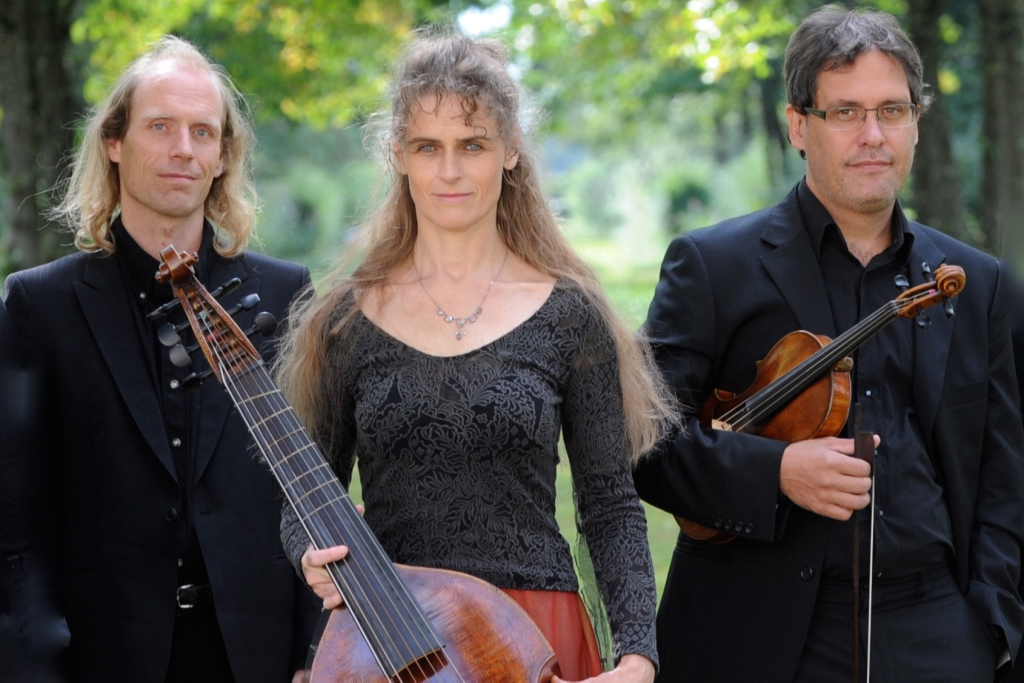
During Forum Musicum, we will travel to England in search of groundbreaking trends in Baroque music. In the 17th century, composers from that country were fascinated by the stylus phantasticus, which originated in northern Germany. Theorist Athanasius Kircher wrote that it was “the freest and most uninhibited method of composition; it is not limited by anything – neither words nor melodic theme”. This intriguing phenomenon will be presented by artists who enjoy considerable authority in the world of historical performance. The ensemble they founded bears the same name as this free-form movement in early music – Stylus Phantasticus.
The group’s members met while studying at the famous Schola Cantorum Basiliensis, where they mastered their skills under the tutelage of such eminent figures as Jordi Savall, Paolo Pandolfo, and Hopkinson Smith. Today, they give their own performances as well as with international ensembles such as Hespèrion XXI, Les Arts Florissants, and Café Zimmermann. Stylus Phantasticus regularly appears at European festivals, often collaborating with distinguished soloists (including Andreas Scholl). Their numerous albums have garnered critical acclaim and prestigious awards, including the Diapason d’Or. Their concerts capture the listeners’ imagination, combining virtuosity with simplicity and expression with intimacy.
The stylus phantasticus movement is associated with the practice of the instrumental fantasy genre. Luis de Milán’s 16th-century definition echoes Kircher’s words, quoted earlier. De Milán argued that the form of such works derives “solely from the imagination and craftsmanship of the author who created them”. An English version of this type of music is the so-called fantasia-suite, intended for performance by small ensembles and written by composers such as William Lawes, John Jenkins, and the older Giovanni Coperario. During the performance by Stylus Phantasticus, bringing together artists from Argentina, Germany, and France, such pieces will form the core of the programme. The final performance will feature a work by Dietrich Buxtehude – one of his late sonatas, not devoid of improvisational freedom, crowning Buxtehude’s work, a master who once enchanted Johann Sebastian Bach.