
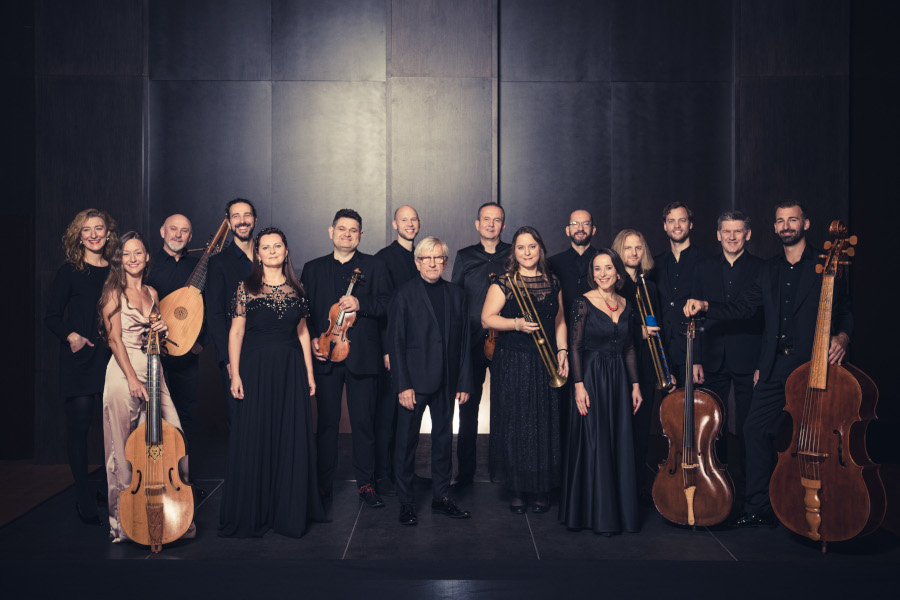
The reign of the Swedish Vasa kings, particularly Sigismund III and Władysław IV, on the Polish throne is one of the most important and fascinating periods in the history of music in our country. The first half of the 17th century saw the arrival of distinguished foreign artists to Poland, with genres representing the latest trends in European music, including opera, developing rapidly. Wrocław Baroque Ensemble, under the direction of maestro Andrzej Kosendiak, will present pieces by composers associated with the court of the monarchs from this northern dynasty.
During the reign of the first Vasa king, as early as 1595, a large ensemble was formed at the royal court. Its musicians came mostly from Italy – the cradle of many of the most innovative movements in European culture since the Renaissance. Krzysztof Kochanowski, nephew of the famous poet Jan, had been entrusted with recruiting the artists. The greatest influence on the ensemble’s playing and the style of the pieces performed was exerted by bandmasters from Rome, such as Marco Scacchi, who served in this capacity from 1633. The court artists hailed from various regions of the Italian Peninsula. Tarquinio Merula and Giulio Osculati, for example, came from Lombardy. Those employed did not solely perform; they also engaged in teaching music to boys from both Italy and the Polish-Lithuanian Commonwealth. Travelling with the monarch’s entourage, the group influenced tastes in various centres where music – both secular and sacred – was practiced in Poland. Of course, it was not only the arrivals from Italy who were responsible for the flourishing of this art form in the Polish-Lithuanian Commonwealth.
Marcin Mielczewski served as the royal musician from around 1632. A dozen or so years later, he became kapellmeister to Karol Ferdinand Vasa, Bishop of Wrocław and Płock, brother of Władysław IV. The surviving works suggest that under the patronage of this prelate, the composer, often signed as M.M., experienced the heyday of his talent. Among Sigismund III’s favourite artists was the outstanding violinist Adam Jarzębski, born in Warka, known today primarily as the author of the Canzoni e concerti – the most important Polish instrumental music collection. In his writings, Jarzębski lists Bartłomiej Pękiel as deputy kapellmeister. Pękiel was an organist and an excellent, versatile composer associated not only with Warsaw but also with Kraków, who served the last king of the Vasa dynasty on the Polish throne, Jan Kazimierz and his wife, Louise Maria Gonzaga. The war with Sweden in the middle of the 17th century brought an end to the activity of artists of this stature in the Polish-Lithuanian Commonwealth. The musical culture declined, waiting for revival until the next century – under the rule of the Saxons and King Stanisław August Poniatowski.