
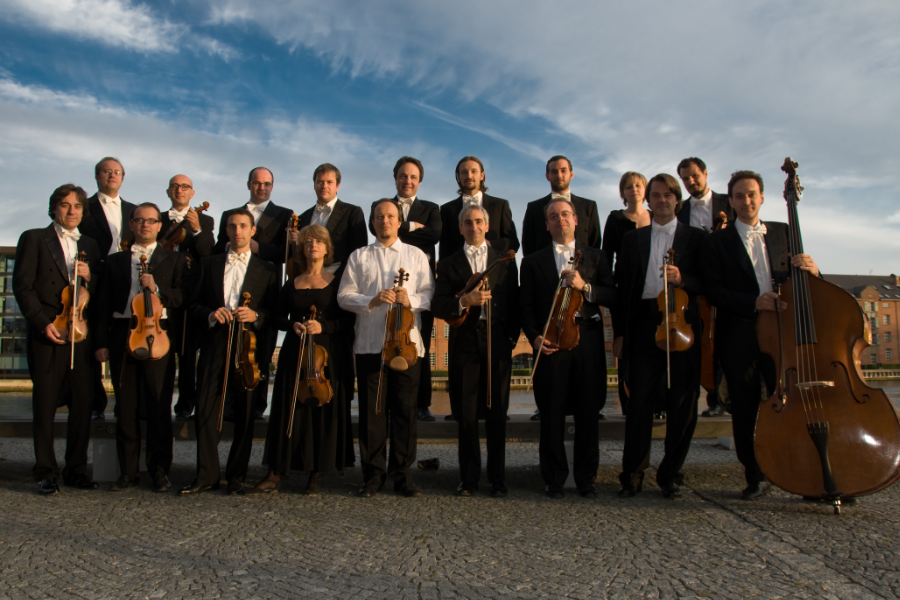
Italy undoubtedly has reasons to be proud of its past. Its musical culture, associated mainly with the opera, also gave us a rich tradition of instrumental music of the Baroque and Classical eras that, still in the 20th century, had to compete for popularity with bel canto. The Cameristi della Scala, founded by orchestra members of the Teatro alla Scala, a temple of musical drama in the heart of Milan, have been active for decades now and proven that true passion for music spans a bridge across genres and eras. The artists, together with the versatile Italian mezzo-soprano Daniela Pini joined by guitarists Massimo Polidori and Giovanni Inglese, will present works by Antonio Vivaldi and Nicola Porpora.
Vivaldi hailed from Venice. Nicola Porpora was born in southern Italy – in Naples. He taught singing and composition, and his students included famous artists, such as Haydn. Porpora is associated with a group of composers developing the art of opera – the so-called Neapolitan School. However, his opera Semiramide riconosciuta premiered in Venice. The aria In braccio a mille furie, which we will hear at the end of the concert, was performed by Farinelli, one of the composer’s students. The recipient of the dedication of one of Porpora’s settings of Salve Regina, also included in the programme, was Elisabetta Mantovani, known as Zabetta, a prized possessor of the lowest female voice – the contralto. During the Cameristi concert, we will also hear an aria from one of Porpora’s most successful works, Siface, with a libretto by Pietro Metastasio.
The composition of the serenata Andromeda liberata is linked to the Venetian-born Cardinal Pietro Ottoboni, a renowned music lover, who returned to Venice in 1726. This work is most likely a collaboration by several leading composers from the city. The aria Sovente il sole is a work by Antonio Vivaldi. Another aria by this brilliant composer – expressing the pain of separation, Vedro con mio diletto – comes from his own opera, Il Giustino, which was performed in Rome in early 1724. The evening will also feature instrumental concertos, for which Il Prete Rosso is best known and which, not only for their number, represent the most impressive part of his legacy. The Cameristi della Scala will prove that The Four Seasons are not the only concerti by the Venetian master worthy of interest and focused attention. Among them, the Concerto for two cellos and strings stands out for its line-up and surprising sonorities.