
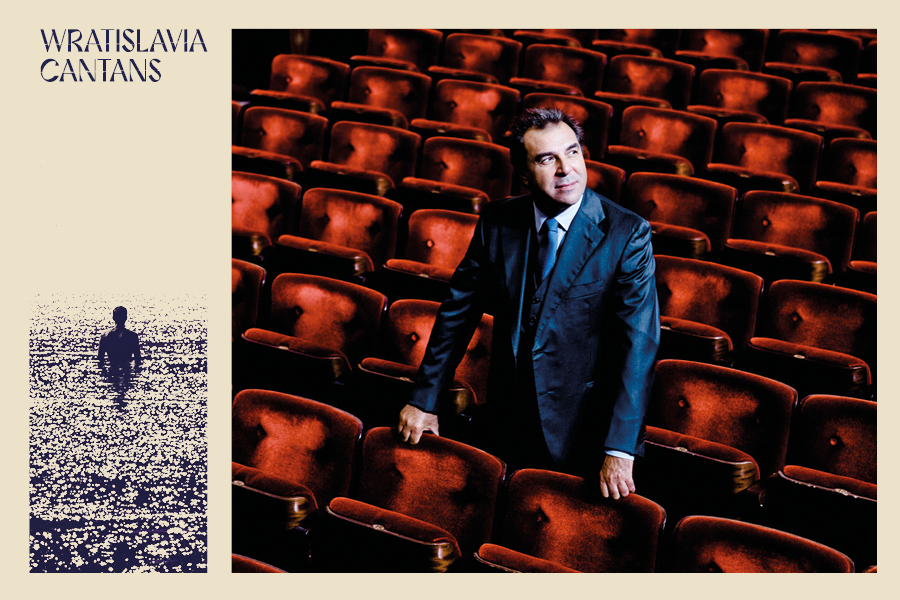
When Gustav Mahler took over as director of the Hofoper in 1897, and it was then that the most important and demanding period of his life began. The decade spent in Vienna was the heyday of his fame. Surprisingly, his Sixth Symphony, written in the midst of this fortunate period, is filled with pain and pessimism. In the finale of the 61st International Festival Wratislavia Cantans, this moving masterpiece will be performed by the Staatskapelle Dresden – one of the world’s most famous orchestras – under the baton of Daniele Gatti.
The Sixth Symphony was premiered in Essen in 1906. It begins with a dark march interpreted as a self-portrait of the composer. His wife, Alma Mahler, related other elements of the work, too, to the composer’s life. Alma claimed that the famous three dull hammer blows in the finale symbolised the blows of fate falling upon the artist. The last one was supposed to “fell him like a tree”. She attributed prophetic meaning to these expressive gestures and connected them with the tragic events of 1907: the death of the couple’s daughter, Mahler’s forced departure from the Viennese Opera, and the diagnosis of a serious heart condition. The latter, she believed, contributed to the eminent symphonist’s death in 1911.
The “Tragic” nickname, which has stuck to the Symphony, comes from Mahler. While writing this music, he was tormented by a sense of impending disaster. He masterfully combined its dramatic overtones and maximalism with classical discipline. Its heart is the motif of the transition from the triad in A major to A minor – a symbolic encapsulation of the pessimistic mood of the entire work. The order of the two middle movements – the Scherzo and the Andante moderato – is a matter of debate, but the whole inevitably builds towards a devastating finale. The premiere reception of The Sixth was lukewarm – critics misunderstood its author’s intentions. It is known, though, that from the very beginning, the work was met with enthusiasm by two young artists, Anton Webern and Alban Berg. It would soon become clear that these two would be among the elite group of composers who determined the direction of music throughout the 20th century. This is the best evidence that, while one may doubt whether Mahler actually foresaw the twists and turns of life in The Tragic, the resulting composition is nonetheless truly prophetic.
In partnership with:

Co-financed by: