
Although Paul McCreesh is primarily valued as an interpreter of Baroque music, his repertoire encompasses a much broader range of works. This is visible in the NFM Wrocław Philharmonic concert programme featuring music by Frederick Delius and Pyotr Tchaikovsky, as well as a new composition written to celebrate the 20th anniversary of Radosław Pujanek’s work as concertmaster with the orchestra.
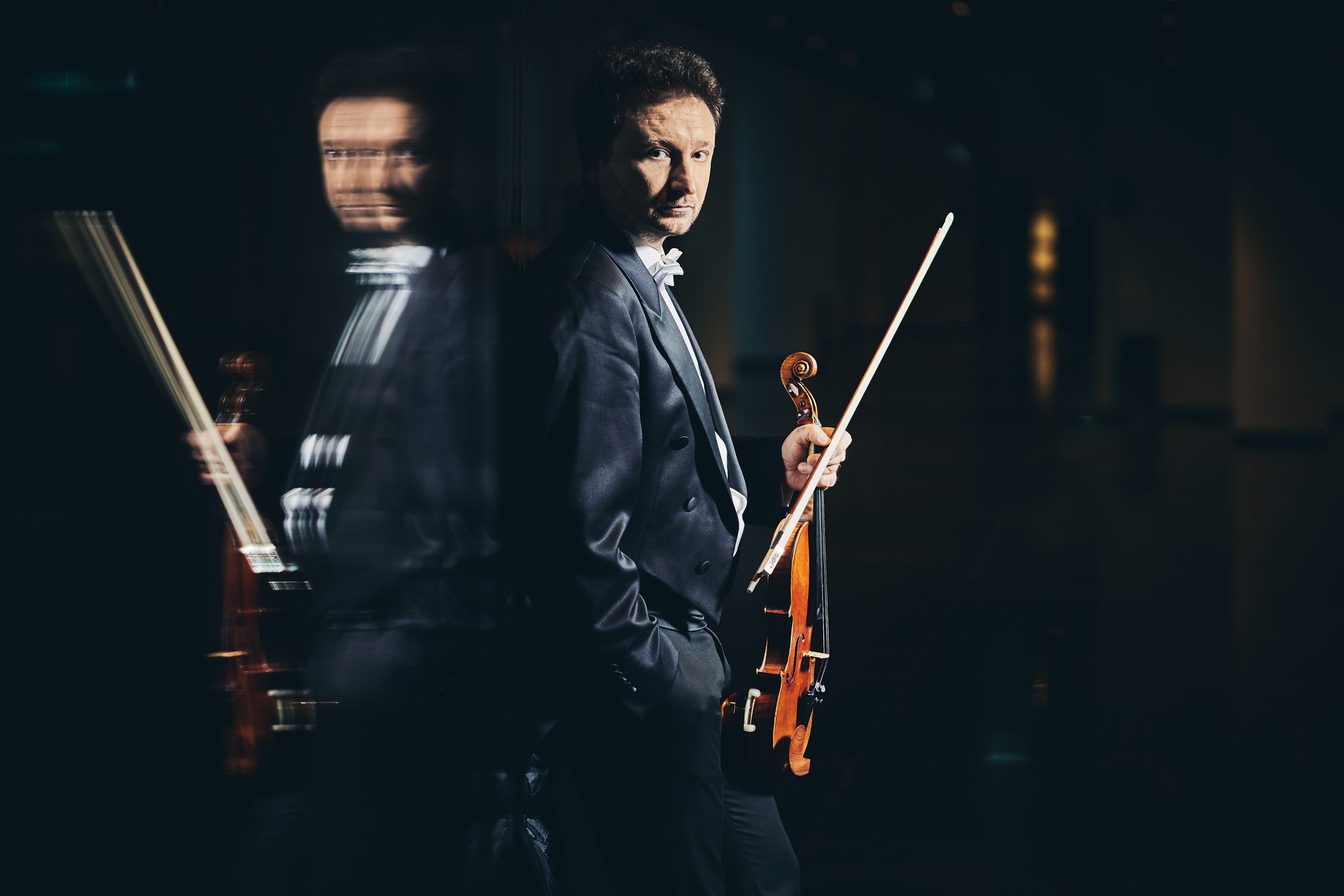
The Walk to the Paradise Garden, which will open the evening, is the most famous and frequently performed excerpt from Frederick Delius’s opera A Village Romeo and Juliet. It is lyrical, subtle, and dynamically gentle. The narrative is driven by strings and woodwinds. The piece appears between scenes five and six of the opera, when the lovers Sali and Vreli go to an inn called the Paradise Garden. A highlight of the concert will be the premiere of a new work by Przemysław Pujanek, violist, chamber musician, and composer. The artist is a graduate of the University of the Arts in Berlin, a laureate of international competitions, and a collaborator with ensembles such as the Berliner Philharmoniker and the Konzerthausorchester Berlin. His latest piece was written to celebrate the twentieth anniversary of Radosław Pujanek’s work with the NFM Wrocław Philharmonic. The Dialogues features solo parts for violin and viola, to be performed by Radosław and Przemysław Pujanek. The title not only references a specific conversation between the solo instruments and the orchestra but also reminds us about the importance of dialogue as a platform for sharing thoughts, experiences, and cultures. The composer was inspired by the sounds, melodies, and musical traditions of various parts of the world.
“I can honestly tell you that I consider this symphony the best thing I have written so far, or at least the one I have experienced most deeply. I love it as I have never loved any of my compositions before,” wrote Pyotr Tchaikovsky about his Symphony No. 6 in B minor “Pathetique” in a letter to his nephew, Vladimir Davydov. The work premiered on October 16, 1893, in Sankt Petersburg. Just nine days later, its composer died. His sudden passing, combined with the emotional and often dark nature of the music, has sparked widespread speculation regarding the circumstances of his demise. The first movement of the symphony features a quote from an Orthodox funeral hymn, and the finale is a moving Adagio lamentoso. However, the whole work is much more multifaceted. The second movement is a charming waltz in an unusual 5/4 metre, while the third is an energetic, radiant triumphal march. Its striking finale often makes the audience break into applause before the composition ends. Will this also happen at the NFM?