
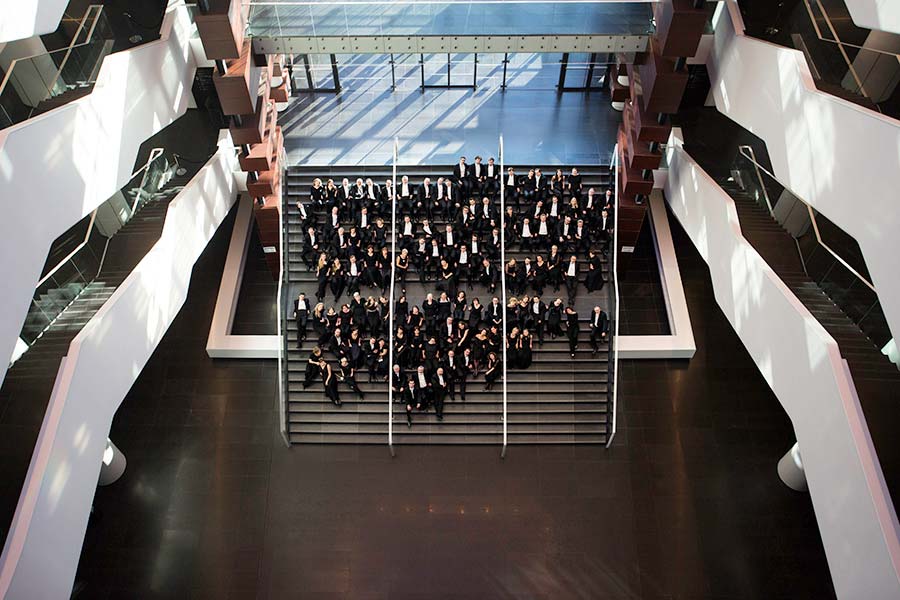
In 2027 Felix Mendelssohn’s 180th death anniversary will be commemorated. To mark this occasion, the NFM will perform the rarely heard symphonic-cantata masterpiece: Symphony No. 2 “Lobgesang” op. 52. The NFM Wrocław Philharmonic will join forces with the NFM Choir. Join us for a night of choral music’s elevating beauty.
In 1840, a festival was held in Leipzig to commemorate the 400th anniversary of Johannes Gutenberg’s invention of print. In the 16th century, this proved to be crucial for the rapid and effective spread of the Reformation ideas throughout Germany. In Mendelssohn’s time, the Evangelical Lutheran faith played a fundamental role in the emerging patriotism of the musician’s homeland. When commissioning the work for the Gutenberg anniversary, the artist (who had already composed the “Reformation” Symphony) returned to previously made sketches of an orchestral piece. He decided to take up Beethoven’s challenge and, using this material, create a symphony-cantata modelled on his great predecessor’s Ninth, then already a quarter of a century old.
The words Mendelssohn used are taken from the Bible and form a hymn of praise (hence the German title “Lobgesang”) in honour of God leading humanity out of darkness – partly through the printed Bible. This is even reflected in the tonal plan of the symphony. The monumental work, lasting approximately an hour, consists of three symphonic movements and ten vocal-instrumental movements. The cantata is harmonised with the orchestral motifs but varied in its line-ups. It features choirs, recitatives, arias, and ensembles. The Leipzig conductor composed the work for two soprano parts and one tenor, as well as a choir and orchestra, in which the organ plays a significant role. The performance of this extraordinary work at the NFM will be one of the most significant events of the season.