
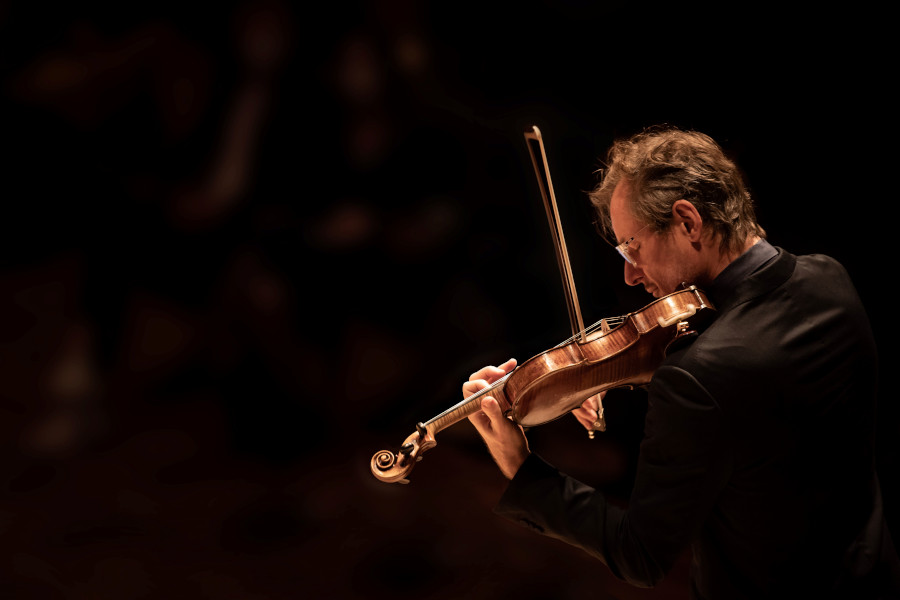
Australian violin virtuoso Richard Tognetti will once again appear at the NFM. Embracing one of the main threads of the current artistic season, he will turn to the music of Johannes Brahms and perform the solo part of the Violin Concerto in D major. After intermission, we will hear Ludwig van Beethoven’s Symphony No. 7, the second movement of which has become a staple in pop culture. In both works, Tognetti will conduct the NFM Leopoldinum Chamber Orchestra.
Brahms already had a reputation for being hard to understand during his lifetime, which is why his only violin concerto, written in 1878, differed from the tradition of this genre’s virtuosic style. Although it was written for Joseph Joachim – an outstanding instrumentalist and longtime friend of the composer whose ideas he shared – it is an example of a work in which structural merit prevails over virtuosity. The concerto, which alluded to Beethoven’s violin concerto in the same key, was performed alongside the Beethoven during its premiere, a move Brahms was not pleased with. This should have come as no surprise – there’s no more serious test for innovative music than its juxtaposition with the classics of the genre. Nevertheless, the result of the composer’s efforts has become an undisputed canon piece. The cycle consists of the symphonic Allegro non troppo, the reflective Adagio, and – typically Brahms – the playful Allegro giocoso.
Ludwig van Beethoven’s Symphony No. 7 in A major, which will be performed in the second part of the evening, was composed exactly sixty-six years before Brahms’s violin concerto. At the time, its composer was in Teplice, Czech Republic, near Ústí nad Labem, where he had gone to recuperate. It is speculated that the composition was an expression of protest against Napoleon’s domination of Europe (the artist was then unaware that it was about to end). The premiere took place after the French Emperor’s defeat at Leipzig. The strength of this symphony lies not only in the spine-tingling Allegretto. The other movements are also based on truly fascinating rhythmic patterns.