
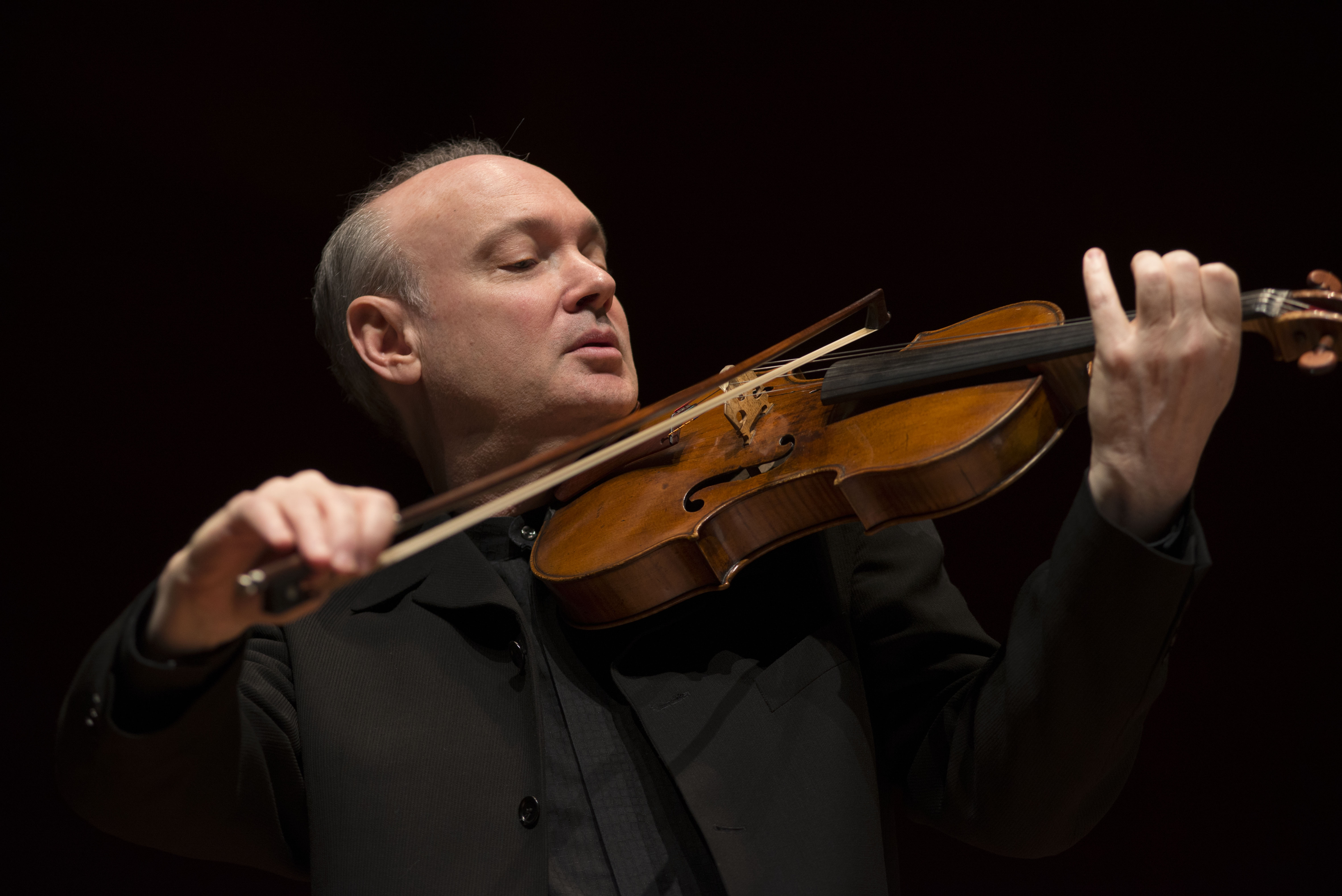
Although it is not easy to define precisely what Central Europe, and its music, actually is, most of us have some idea of the concept. The NFM Leopoldinum Chamber Orchestra, led by its artistic director Alexander Sitkovetsky, with American violist Paul Neubauer, one of the greatest living virtuosos of the instrument, will take us on a journey through the diverse musical cultures of the region where Poland lies.
For much of the 19th century, the countries of Central and Eastern Europe were situated within the borders of great empires. Over time, these powers began to disintegrate, and numerous new states appeared on the map of our continent. The fate of dispersed peoples, such as the Jews and the Romani, unfolded differently in different countries. Yet everywhere, alongside efforts to shape national cultures, composers, driven by the growing interest in native traditions, sought to define musical styles distinctive to these communities.
In Poland, a representative of the folkloric trend (though not exclusively so) was Grażyna Bacewicz. Another figure who can be included in this group (again, not exclusively) is the Warsaw-born composer of Jewish descent Szymon Laks, a prisoner of Auschwitz-Birkenau (prisoner number 49543). His String Quartet No. 3, “On Polish Folk Themes”, was the first composition he created after liberation. An imitation of the Jewish style, meanwhile, can be heard in a work by Maurice Ravel. The concert will also feature authentic Russian (Tchaikovsky) and Romanian (Bartók) melodies.
After the intermission, the “Gypsy” idiom will predominate. We place this term in quotation marks not only because some Romani communities consider it offensive. In concert halls and fashionable salons, the evocative “Gypsy violin” became a stereotypical symbol of freedom, emotion, and nature, stirring the dreams of people living within the restrictive culture of the time. This is why Ravel’s Tzigane, a work of sheer virtuosity, adopted this very guise. It was also the style embraced by the showpiece miniatures that were in vogue in the early 20th century: works by composers such as Schulenberg and Valdez, or the anonymous The Canary, which requires the performer to skillfully imitate birdsong.