
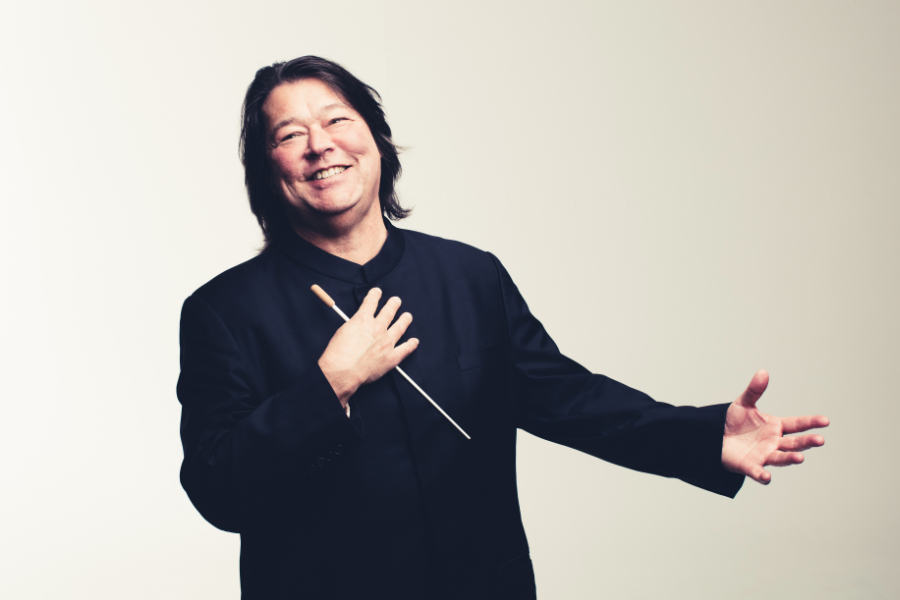
Tonight, you will be immersed in the German cultural sphere, with a programme unified by the theme of twilight: the twilight of an individual, a culture, or even the world itself. Joseph Swensen and the NFM Leopoldinum Chamber Orchestra will present late works by Richard Strauss and Gustav Mahler.
Das Lied von der Erde (The Song of the Earth) is the title Gustav Mahler gave to what was his ninth symphony. He chose this title out of a fear, shared by many composers since Ludwig van Beethoven, that completing a ninth symphony would signal the end of his own life. Often regarded as his greatest achievement, the work lives as a symphony and a song cycle. The texts are drawn from Hans Bethge’s Die chinesische Flöte (The Chinese Flute), a collection of free adaptations of lyrical poetry from the Tang Dynasty (8th century AD). The performance will feature an arrangement for singers and chamber ensemble, begun by Arnold Schoenberg in 1920 and completed by the composer and conductor Reiner Riehn, who premiered this version sixty-three years later in Toblach, South Tyrol. It was in this very town, in a small, secluded hut, that Gustav Mahler worked on Das Lied von der Erde. This chamber version is scored for a string quintet, a wind quintet, piano, celesta, and percussion. The symphony will be preceded by a short overture: the sextet from Richard Strauss’s final opera, Capriccio (1942). This piece opens the performance before the curtain goes up and is integral to the plot, which centers on the debate over whether poetry or music should take precedence. The convention of aesthetic artifice, an idealized “bygone beauty” embodied by opera, provided a radical distance from the politics of Nazism, a regime toward which Strauss held a decidedly negative attitude.