Iberian Academy – Fiesta española

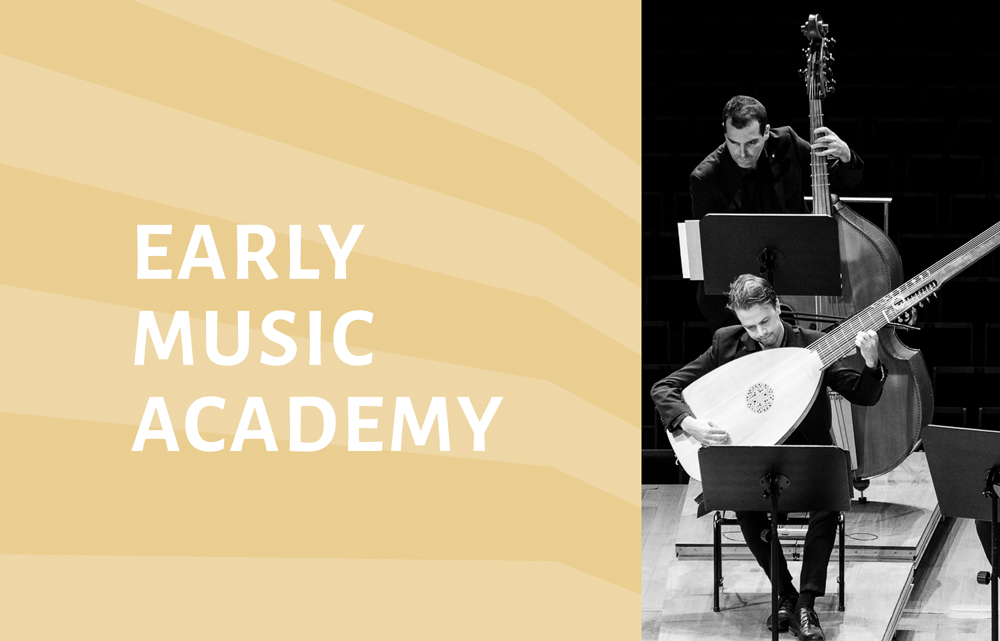
It’s obviously a coincidence, but I spent my last vacation in Spain. While exploring sunny Andalusia, the same question kept coming back to me, one that had haunted me on all my previous visits to this beautiful country: why do we know so little about its music? We admire its architecture and paintings, discuss the history and influence of the Spanish on the political destiny of many countries, even entire continents. And yet, when I gazed at the impressive Baroque organ of Granada Cathedral or marvelled at a quartet of Stradivari instruments on display at the Royal Palace in Madrid, I had to admit with embarrassment: I don’t know the music played on these magnificent instruments! It is high time, then, that the NFM Early Music Academy series took you on a winter city break to musical Spain.

Our festival will be inaugurated by the Cantoria vocal ensemble. This won’t be the first time these artists have visited Wrocław. The singers from Catalonia performed at the NFM several years ago – then as a young, “emerging” group supported by the international scholarship project Eeemerging (NFM was one of its main partners). Currently, Cantoria enjoys a well-established international reputation, and at this season’s Academy, they will present a new programme of Spanish villancicos, A la fiesta, while also producing a CD during their stay in Wrocław.

When Antonio Stradivari delivered his quartet of instruments (actually a quintet, but one of the violas has been lost to history) to the royal court in Madrid, he could not have known that a few decades later a new musical genre would emerge: the string quartet. Chamber music at the turn of the 19th century was surprisingly thriving in Spain, primarily thanks to Luigi Boccherini, who spent most of his life there and composed hundreds of string quartets, quintets, and sextets for his aristocratic patrons. The most important successor to Spain’s chamber music tradition was Juan Crisóstomo Arriaga. The catalogue of this exceptionally talented composer, who died at the age of twenty, includes a collection of three string quartets. One of them, the Quartet No. 2 in A major, flanked by   Boccherini’s works, will be performed in the programme of the La Ritirata ensemble, led by distinguished cellist Josetxu Obregón.

A traditional fixture of the Academy are master classes for students and music school graduates beginning their professional careers. We have asked our guests from Spain to accompany young vocalists and instrumentalists in preparing a programme for the third festival concert. Therefore, for emerging artists, this will certainly be an encounter with unfamiliar repertoire and a uniquely distinctive performance style.

And finally, the zarzuela – the Spanish variety of opera. Vendado es amor, no es ciego is the work of José de Nebra, the most important Madrid composer of the first half of the 18th century. Comic elements of traditional Spanish songwriting are combined here with a contemporary Italian operatic style, exalted vocal parts, and rich instrumentation. The Wrocław Baroque Orchestra, NFM Choir and a host of acclaimed soloists will be led by a representative of the youngest generation of Spanish early music specialists, countertenor, harpsichordist and conductor Alberto Miguélez Rouco.

Spanish culture has been influenced by Arabs, Sephardic Jews, Andalusian Romani, Native Americans, and indirectly enslaved people from Africa. In this melting pot, the distinctive, fiery, and full of temperament colour of Spanish music was forged. It wasn’t stifled by a classical corset, nor concealed by a Baroque wig. You can see for yourself.

Join us for the Iberian Academy at the National Forum of Music in Wrocław!

Jarosław Thiel
Artistic Director

¡A la fiesta!
Cantoría
25.02
Wed.
7:00 PM
NFM, Red Hall
Fandango – chamber works
La Ritirata
26.02
Thu.
7:00 PM
NFM, Chamber Hall
Concert of the Master Classes Participants
Jorge Losana / Hiro Kurosaki / Josetxu Obregón
28.02
Sat.
7:00 PM
NFM, Red Hall
Vendado es Amor

Iberian Academy Finale

 
01.03
Sun.
6:00 PM
NFM, ORLEN Main Hall
Jarosław Thiel / fot. Łukasz Rajchert
Jarosław Thiel
Artistic Director of Wrocław Baroque Orchestra

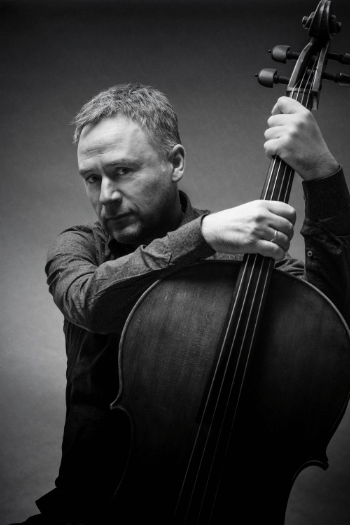
He studied cello at the music academies in Poznań and Łódź, and also completed postgraduate studies at the Universität der Künste in Berlin in the Baroque cello class of Phoebe Carrai and Markus Möllenbeck (diploma with honours). In his work, he focuses primarily on the issues of historical performance practices. He performs regularly as a soloist and chamber musician – in this role he has appeared at many Polish and international festivals of early music. He has collaborated with the most important Polish ensembles performing Baroque music.

Contact
Agnieszka Wróblewska
Manager of Wrocław Baroque Orchestra
Wratislavia Cantans
Jazztopad Festival
Musica Polonica Nova

Musica Electronica Nova
Leo Festival
Forum Musicum
Newsletter Melomana
We announce new concerts, we remind you about the start of ticket sales, we let you know about the last vacancies
Register